Why I Became a Custom Furniture Maker
Typically, it surprises people when they learn that Hardwood Alchemy’s founder and co-owner, Chris, didn’t begin his professional career as a woodworker.
Before starting Hardwood Alchemy, Chris spent fifteen years in finance and consulting, with roles at JPMorgan, Deloitte, and Ernst & Young. Like many of my clients today, I worked in professional environments that demanded attention to detail, careful communication, and a commitment to doing things correctly. Looking back, my transition into woodworking wasn’t a departure from those values. It was a chance to apply them to work I found personally meaningful.
How We Began Woodworking
The path into woodworking began the way many homeowners’ journeys begin: with a house and a desire to improve it. In 2017, we (Chris & Angela) bought our home in the Morris Park section of the Bronx. We expected a fairly straightforward set of renovation projects. Instead, we installed hardwood flooring on the first floor, replaced the door casings and baseboards, and grew fascinated by how architectural details could transform a space. Soon we were paying as much attention to proportion and function as to construction technique.
At the same time, we grew dissatisfied with the furniture we owned, and with the manufactured replacement options on the market. One piece stands out: a floating media console made of laminated particle board, mounted to the wall. There was nothing objectively wrong with it. It fit the wall space, held our electronics, and did the basic job it was built for. But every time we walked into the room, it felt like a compromise. It didn’t match the hardwood floors or the trim we’d spent so much time refining. It wasn’t especially durable, and it wasn’t designed around how we actually lived. Like most mass-produced furniture, it was built to work adequately in many homes rather than beautifully in one.
“Let’s Try It Ourselves”
Eventually, we decided to build a replacement from scratch. At the time, we didn’t fully appreciate what we were trying to do. We thought we were building a piece of furniture, but really, we were trying to solve a problem. We wanted a console that fit the room’s proportions, matched the house’s architectural character, and held up to the demands of daily life. We built it as a solid-wood piece with appropriate joinery and a brush-applied oil finish that would age well over time. Every dimension of the piece was driven by our available space, so the proportions would read as tailored to the house rather than added to it. The console needed to house an AV receiver, a cable box, several vintage gaming consoles, and physical media. It needed to hide the wires and clutter while staying easy to use. Most of all, we wanted it to feel like it belonged in the room, not like it was just occupying space in it.
The Realization that Changed Everything
When we installed the complete piece in our living room, we felt something that has shaped how we think about custom furniture ever since: the room felt complete. It wasn’t because the piece was ornate or elaborate; in fact, most people would never notice the effort behind it. The room felt complete because the piece had been designed specifically for that room, that house, and the way we lived. We still use that media console today, and every time we open its doors, we’re reminded that good furniture doesn’t just occupy a home. It improves the life lived inside it.
That realization became the foundation of our philosophy as furniture makers: thoughtful design creates a more complete living space. When clients contact us about a built-in library, a home office, custom cabinetry, or architectural millwork, they usually start by describing what they want to see, bookshelves, storage, desk layouts, finish colors. After enough conversations, though, we’ve learned that they’re really describing problems they want solved and experiences they want to create.
A family with young kids may want less daily friction and better organization. A finance professional or attorney working from home may need an office that supports focus but still feels connected to the rest of the house. Someone who has spent years collecting books may want a library that reflects who they are. In almost every case, the goal isn’t simply to own custom furniture. It’s a home that functions better and feels more intentional to live in.
Many Hats, One Goal
Not every project begins with me as both designer and builder. Many of our clients are homeowners working with an interior designer or architect who has already developed a vision for the space. We also increasingly hear directly from designers and architects who need a millwork shop that can execute their specifications with precision. In those projects, my role shifts from creative partner to fabrication partner. We read shop drawings, verify field dimensions on site, and build to the tolerances that fine cabinetry and finish carpentry demand. A good working relationship with a designer depends on the same things that matter with a homeowner: clear communication, realistic timelines, and a willingness to solve problems during installation rather than after the fact. Whether we’re developing a concept from scratch or building from someone else’s drawings, the standard doesn’t change. The finished piece has to look like it was always meant to be there.
This perspective comes partly from years spent as a furniture consumer before we ever became makers. I’ve bought furniture that looked better in a showroom than in my home. We’ve assembled pieces that never quite fit the space they were meant for. We’ve dealt with bad storage, tangled cables, awkward proportions, and finishes that wore out fast. Those experiences are valuable. They let us approach each project as someone who understands what it’s actually like to live with furniture every day, not just as someone who builds it.
“It Looks Like it Always Belonged There”
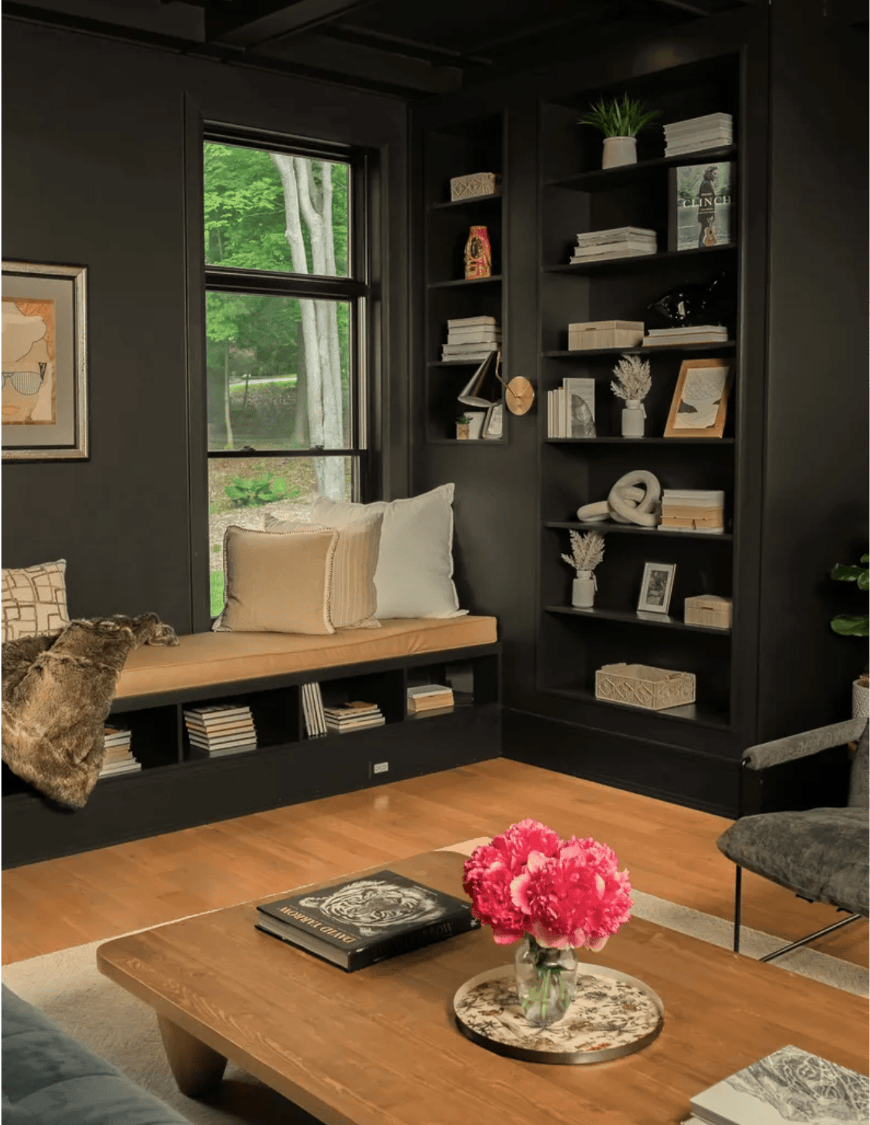
For that reason, custom furniture isn’t primarily an exercise in aesthetics to us, though aesthetics matter. It’s a process of solving problems thoughtfully and beautifully. Good built-in furniture makes daily life easier. It looks like it has always belonged in the home, and it anticipates practical needs while adding to the architectural character of the space. The best custom work often feels inevitable, as though the room had been waiting for that piece to exist.
Getting there takes far more than building cabinets accurately. Many of the most important parts of custom woodworking are invisible. Clients naturally focus on what they can see: finish quality, proportions, fit, and overall appearance. What they don’t see are the hours spent refining dimensions, testing finishes, adjusting reveals, and calibrating doors and drawer fronts. Those small decisions are what separate acceptable work from exceptional work.
Over the years, we’ve become convinced that installation matters as much as fabrication. Beautiful cabinetry loses much of its impact if doors are misaligned, reveals are inconsistent, or transitions to the surrounding architecture look careless. A truly integrated result takes patience and repeated adjustment. Most clients will never consciously notice these details, but they’ll feel their absence every day if they’re missing.
Becoming a Maker
Several years into my woodworking journey, Chris took on a project that changed the course of my professional life. He was renovating and expanding the workshop, and he decided to build a pair of custom exterior doors for the building. Together, the doorway spans about 7.5 feet wide. Each door is built from Sapele, an African hardwood related to mahogany, with six raised panels. We cut traditional mortise-and-tenon joints for the frame and panels and finished the doors with a marine-grade spar varnish, built up in several coats to withstand direct sun and weather. Exterior doors are unforgiving work; wood movement, seasonal humidity, and structural loads all have to be accounted for in ways that indoor cabinetry doesn’t demand. Each door is nearly 7 feet high and weighs more than a hundred pounds. The project demanded nearly every skill I’d developed to that point: design, joinery, milling, finishing, and a lot of persistence.
When he stepped back to look at the finished doorway, Chris felt a satisfaction unlike anything from his previous career. He realized that what he found most rewarding about woodworking, solving hard problems and shaping the spaces people live in, was exactly the work he wanted to do full-time.
Those doors are still on the workshop, and he passes them every morning when he starts work; they’re a daily reminder of why we started Hardwood Alchemy.
Many of my clients recognize something familiar in this story. They’re often successful professionals who value quality and thoughtful design. They understand that some investments pay off precisely because they improve daily life for years. They aren’t chasing luxury for its own sake; they want spaces that function beautifully and feel authentic to their homes.
Connecting with Clients
Today, that same philosophy shapes every project we take on for Hardwood Alchemy. The work varies: a built-in home library, a media console, a mudroom bench with custom cubbies, a home office with an integrated desk, a full suite of kitchen and bar cabinetry. We work with homeowners, interior designers, and architects throughout NYC, Westchester County, Long Island and the greater NYC / North Jersey area. Most projects begin the same way this one did, with a room that almost works and an opportunity to make it work completely.
That’s what motivates our work as furniture makers. Thoughtfully designed, carefully built furniture makes a home better to live in. When a client works with Hardwood Alchemy, our goal isn’t just to build cabinetry or millwork. It’s to create something that feels like it has always belonged there, something that becomes part of the home for decades to come.

